Forensics
False Flag

This challenge provided an png file called false_flag.png. I ran the command 'grep -a "O24{" false_flag.png' to see if the flag format was in the file as plain text. This revealed the flag:
O24{f!l3$_4R3_noT_A1w@y$_wh@t_7heY_sE3m_T0_b3}
FlagInThePackets
This challenge provided a pcap file containing network traffic. I opened it in WireShark and followed the TCP stream, which revealed this:
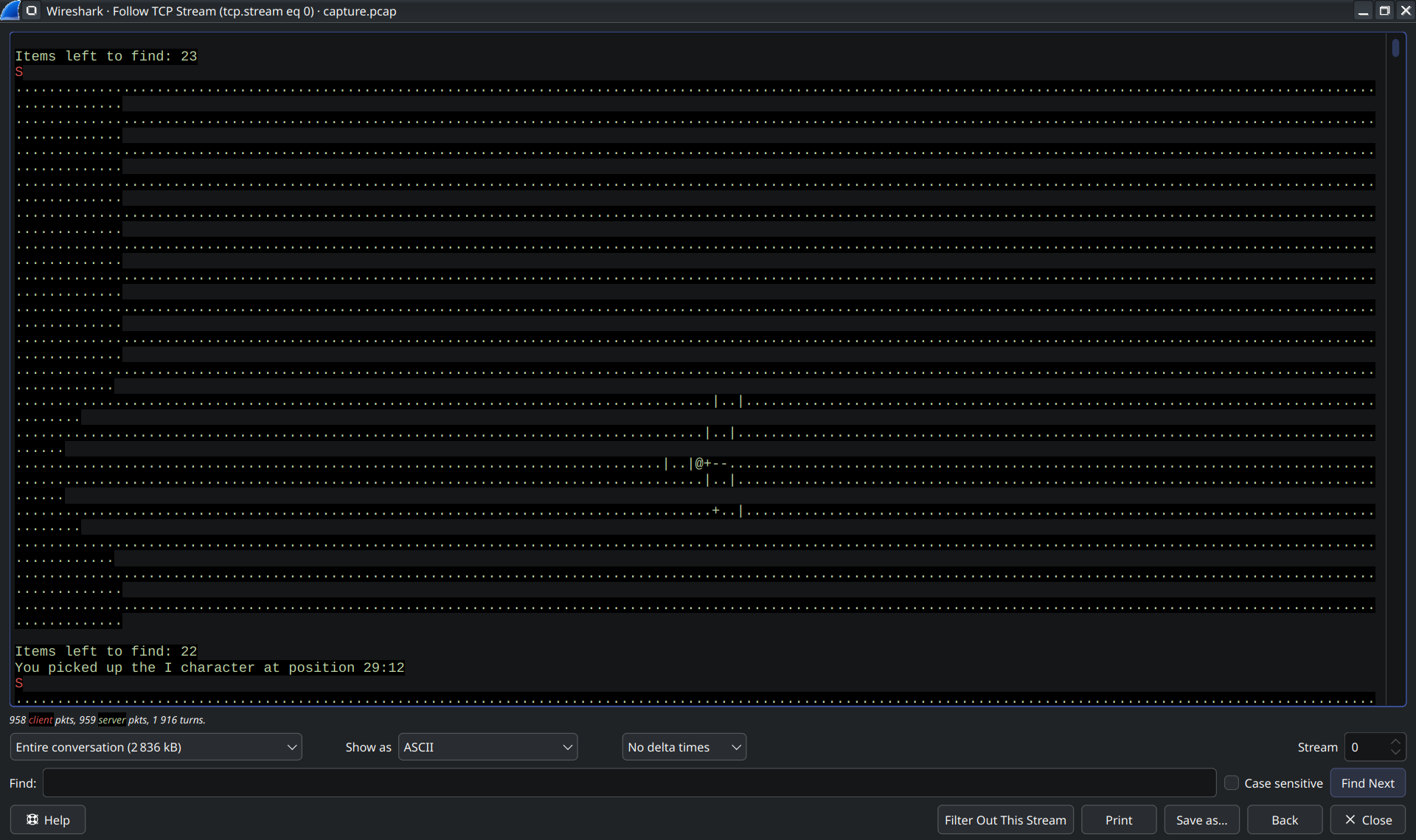
In-between the junk, the stream contained lines like "You picked up the X character at position Y:Z". Taking a closer look at the characters I found all the characters of the flag format "O24{}" scattered.
This suggested the characters needed to be rearanged based on their positions.
"O" had position 1:1, "2" was at 7:1, "4" at 55:3, "{" at 2:5. This suggested first sorting by the second number (coordinate), then by the first.
So I wrote a small python script to extract the characters and their positions, sort them based on the 2D coordinates, and then join them to get the flag:
                with open('./tcp_stream.txt', 'r') as file:
                    stream = file.read()

                # Find the "You picked up the X character at position Y:Z" lines
                lines = stream.splitlines()
                flag_chars = []
                positions = []
                # Extract characters and positions
                for line in lines:
                    if "You picked up the" in line:
                        parts = line.split()
                        char = parts[4]
                        position = parts[-1]
                        positions.append(position)
                        flag_chars.append(char)

                characters_data = []
                position1 = []
                position2 = []

                # Split positions into two lists
                for pos in positions:
                    position1.append(int(pos.split(':')[0]))
                    position2.append(int(pos.split(':')[1]))

                # Combine characters with their positions
                for c, p1, p2 in zip(flag_chars, position1, position2):
                    characters_data.append({'char': c, 'x': p1, 'y': p2})

                # Sort characters based on a 2d grid (y first, then x)
                sorted_data = sorted(characters_data, key=lambda k: (k['y'], k['x']))

                # Join all the sorted characters to form the flag
                flag = "".join([item['char'] for item in sorted_data])

                print(f"Flag: {flag}")
Merry Mischef
For this challenge we got a file called "Mysterious.jar". JAR files are essentially just ZIP files, so I started by extracting the file. Right away I found a file called "end.png" which contained: This appeared to be the end of the flag, but I still needed to find the rest.
I opened the original file in a text editor and saw some interesting file headers. I then opened Cyberchef to preserve the binary data, which might get lost in a normal text editor, and extracted a JPG file:
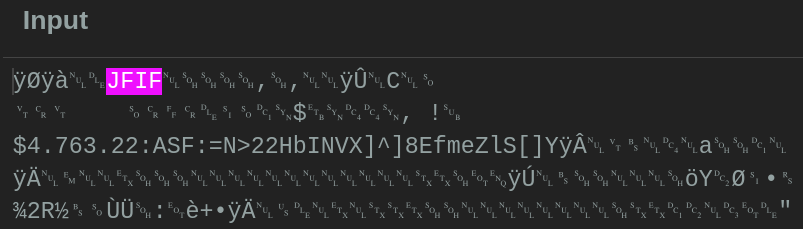
Which contained:

And a PDF file:
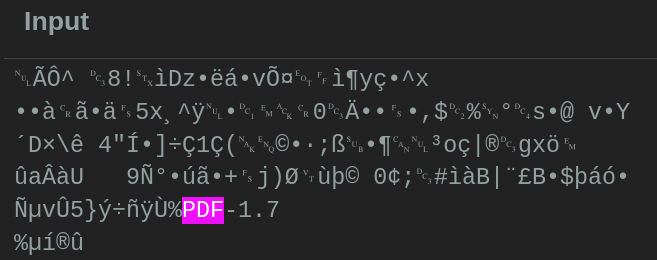
Which contained an image:
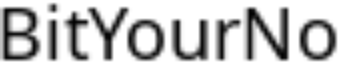
Combining all of them gave the flag: "O24{Oops:)BitYourNose^w^}"